Saturday, August 21, 2010

Ramadan and Food!

   A nice juicy steak with all the trimmings. A big bowl/plate of pasta. A pizza with your favourite topping. Roast potatoes. Molokhya*. Fatta*.  Whatever food you like, and sometimes even ones you don't like much, at some point during the  day in Ramadan you will be thinking about food. If you're not thinking about it, you're talking about it. Or watching a cooking programme. Or reading recipes. Or shopping for/preparing food for Iftar-literally breakfast-the main meal of the day. 

  It may be breakfast Jim, but it's not as we know it! Forget cereal, toast and pancakes. This is a breakfast of soup and dates rice or potatoes of vegetables and meat, especially  in Egypt, meat reigns supreme. No gathering of friends or family would be complete without copious amounts of meat. Red meat cooked in various ways, chicken, turkey, you name it, chances are it'll be on the table!
  
A traditional liquorice juice seller.
  The juices are equally varied but usually include Ammr elDin which is an apricot drink, made from sheets of dried apricots dissolved in hot water (much like sheets of gelatin). Karkadeh is a tea made from the hibiscus flower and can be served hot or cold. Kharoub  is another favourite in my house as is liquorice. All these drinks have medicinal benefits,  some can help regulate blood pressure (Karakadeh lowers while liquorice increases), cholesterol and blood sugar levels-essential when a person has been fasting.  


  And now, dessert! Although the sweets eaten in Ramadan are available all year round, they have a special place in any Ramadan meal. In Egypt most people stick to Oriental sweets at this time of the year, the most popular being konafa a dish made with shredded fillo pastry, drenched in syrup and stuffed with nuts or cream or raisins. Basbousa is a semolina dessert again cooked with syrup. Baklava, golash (pastry not meat) and various other sweet things also make an appearance. 


  Sohoor  is the meal eaten about an hour before dawn as a chance to fill up the tank before another day of fasting (all that food from earlier doesn't count!). This is a much lighter meal usually of eggs, fool( broad beans) and cheese. 


  It should be noted at the end of this piece that although food plays a major part of this holy month, it is about much much more. This is the first time I've experienced Ramadan in the heat of summer (Ramadan gets earlier by about 11 days each year, following the lunar cycle) and never in my life have I been more grateful for a glass of cold water and count my blessings that I have access to clean, safe drinking water. And that is the main reason behind this month, to remind us of how lucky we are to be able to eat and drink and to give a taste (if you'll excuse the pun) of how people with little or no food and water feel everyday and to remind us to help as many of those people as we can. A common sight in streets during this month is Moa'ed Rahman  or Mercy Tables where people pay or provide food to feed the needy, these are open to anyone all throughout the month.


All images were found using Google Images. No copyright infringement intended. 

Wednesday, August 11, 2010

Ramadan Lanterns


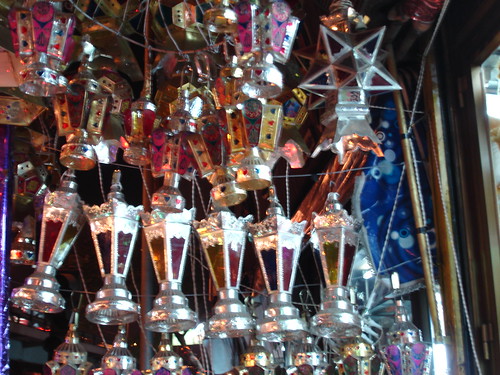
   Well it's that time of the year again; Ramadan! The ninth month of the Islamic Hijri calender. (The word Hijri comes from the Arabic word Hijra or migration, as the Islamic calender counts years from the Hijra-when the Prophet Mohamed left persecution in Mecca for Medina.) In Egypt one of the most obvious signs that the Holy month of fasting and piety is about to begin, apart from worse-than-normal traffic, is the appearance of the 'fanoos' or the Ramadan lantern.

    The origins of the fanoos isn't exactly clear some think it is an evolution of the use of candles in certain Ancient Egyptian religious ceremonies which was adopted by Coptic Christians and then by Muslims. The story I've heard most often is that the use of the fanoos during Ramadan was popularized during the Fatamid period when the Chaliphe ordered the streets of Cairo be lit at night by lanterns.


   Traditionally fawanees are made of tin and coloured glass (see pic above) by artisans all over the country, often using recycled scrap metal. Unfortunately recent years have seen an influx of cheap, mass-produced plastic lanterns from China. These often bear very little resemblance to the traditional fanoos, can play music (either traditional Egyptian Ramadan folk songs or the latest hits) and are completely lacking the soul and calender of the traditional models.

  The aforementioned Ramadan folk songs are another sign of the month, this first one is traditionally associated with the fanoos. Entitled "Wahawey ya Wahawey" it celebrates both Ramadan and the fanoos.


This second is a called "Ahlan Ramadan" or "Welcome Ramadan"


So, Ramadan Kareem to you all!!

All images on this page were found via Google Images. No copyright infringement intended. 

Sunday, August 8, 2010

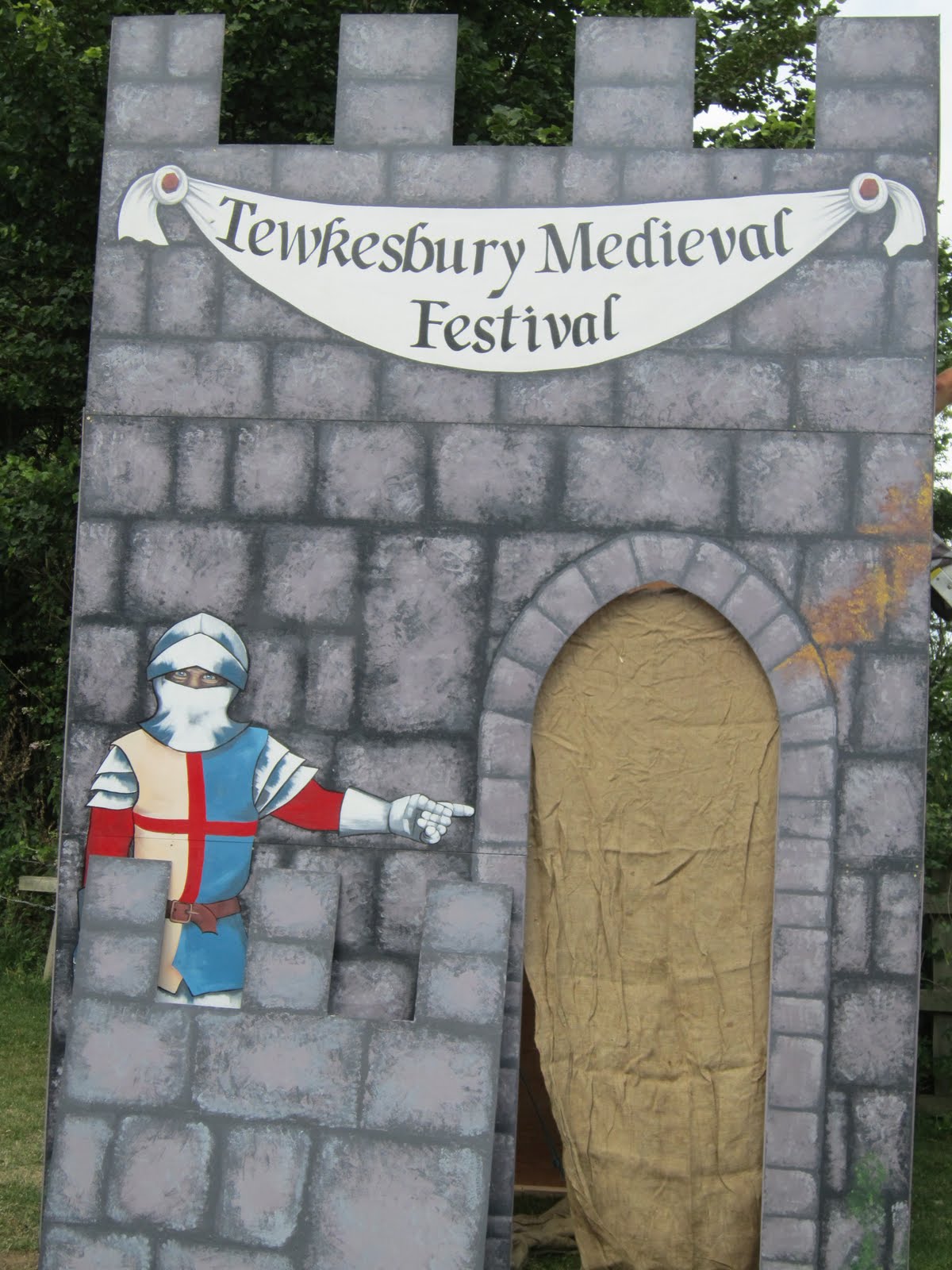
Tewkesbury Medieval Festival


   First off, some history: The war of the roses was fought in the 15th century 1455 – 1485 between the Houses of Lancaster and York (the roses part of the name comes from the fact that the Lancastrians’s emblem was a red rose while the Yorkists’s insignia was a white rose).
   The final deciding battle took place in May 1471 in the town (at the time village) of Tewkesbury which stands at the point where the rivers Avon and Severn meet. The battle was here because the Lancastrian army was trying to cross the Severn to reach Wales where they had hopes of allies to join them against the Yorkists. The battle took place on a meadow near Tewkesbury Abbey, known since that day as Bloody Meadow. The Yorkists won the battle, led by the King Edward IV and his brother Richard Duke of Gloucester (later Richard III).

The re-enactors prepare for battle!
   Now on to the fun stuff! Every year in July the battle is re-enacted at the original location with re-enactors, historians, enthusiasts and tourists from around the world, in the largest medieval festival in Europe. The normally empty meadow is transformed into a 15th Century battle camp with tents, banners, soldiers, knights and men-at-arms. 

The battle is re-enacted twice over the course of the two day festival, ending each time at the Abbey- where the defeated Lancastrians had sought Sanctuary-which was stormed by the Yorkists to arrest the leaders of the Lancastrian army.
  For the two days of the festival, and the weeks leading up to it, the town of Tewkesbury proudly shows off its history. All the shops in down the High Street and other main roads hang the colours and coats of arms of the various lords who fought in the battle, they also change their window displays to reflect the medieval mood, with beautiful costumes replacing the usual jeans and t-shirt combination in clothes stores and bookshops highlight books of local history over the latest bestsellers.

The Merchant House and Shop in the Abbey Cottages.
   One of the black and white timber-framed Tudor buildings near the Abbey is opened up as a working merchant’s house and shop and the ‘merchant’s wife’ gives regular tours, explaining what life would have been like for the family living and working in the space at the time. The food would have been cooked over the fire in the kitchen/living space (and here’s us thinking we invented open plan living!) using herbs and as many vegetables as could be grown in the garden. The herbs would have also been used in making simple household remedies as an apothecary would have been an expensive luxury for everyday ailments.


Here are some more pictures from the first day of this year’s festival.

FalafelandChips with a BowandArrow!
Ye Olde Medieval Advertising! 
 I Don't Think I Need to Explain Why I Took This One!

A Selection of Helmets


Saturday, July 24, 2010

Falafel in the land of Chips!

Greetings from the Great Smoke aka: London!!

  Just a quick note to let you all know that I'm currently in the capital and so far everything's been great!! Met up with the Irish Alexandrian a couple of times to take in some of the sights.

   Looking forward to heading to another capital city on Monday, Cardiff this time. Look out Wales FalafelandChips is on the way!!!

   More detalis of my trip so far willl be posted once I'm back in Cairo and will include:
  • Report and pictures of the Tewkesbury Medieval Festival.
  • Report and pictures of Tewkesbury Abbey.
  • Report and pictures of The Tower of London.
  • Report and pictures of Cardiff.
  • Anything else I can think of!!
Blog to you all soon!

xx

Friday, July 2, 2010

To 'B' or to 'P'? That is the question!

  Well it is if you're an Arabic speaker learning English or a teacher tearing your hair out in despair at silly spelling mistakes.
   Despite the fact that the Arabic alphabet has 28 characters to the English alphabet's 26, there is no equivalent to the letter 'P' only 'B'. This has lead Egyptians to come up with a unique way of differentiating between the two to help with spelling, there's B khafifa ('light' B) and B tekila ('heavy' B).
   Now if you guessed that the 'light' B is 'P' and the 'heavy' B is B,well sorry you're wrong! For years I was convinced that was the right way round, because to me as a native English speaker it made more sense, and the I had to remember that it was the opposite of what made sense. The only reason I've managed to find so far for the naming is that P is light as its 'hump' is at the top, while the hump of the 'b' is at the bottom making it heavy.Get it?

 So tomorrow I'm off to change my Egybtian bounds into Pritish pounds and sign things with a plue ben!

Tuesday, June 29, 2010

School's Out For Summer!

  Books and artwork have been sent home. Displays have been taken down and supplies have been packed away for the summer. Rooms that have been noisy for 10 months are now silent till August when it all starts again. Yep, the school year's over and done with for another year! Summer's here and it would be difficult to say who enjoys it more, students or teachers.

So, to all my fellow teachers I wish you a summer free of planning, grading, meetings and other people's children and plenty of lie-ins, we've earned them!

Enjoy!

Saturday, June 26, 2010

Korba Festival!

   The first Korba Festival was held to celebrate the centenary of Heliopolis in 2005. Heliopolis was established in 1905 by Belgium Baron Empain, Ă‰douard Louis Joseph an amateur Egyptologist. When building on the new suburb began it was a stretch of desert 10 km away from the centre of Cairo (now known as Old Cairo or Masr El- Kadima), nowadays it is slap-bang in the centre of the city. 


  Since 2005 one street (Baghdad St.) in the Korba area of Heliopolis has been closed to traffic on a Friday to become a place where people can enjoy a stroll around through the street with shops and coffee shops spreading out onto the pavement to display their wares and entice you to spend. There's the chance to leave your mark by drawing on the roads and pavements in chalk and for several days afterwards it makes driving down that street a little bit more colourful. 


   This year the theme of the festival was Music the Language of Peace and featured various artists from around the world (don't ask who, I arrived late and missed the line-up!) the star attraction of the evening though was Egyptian jazz musician Yehia Khalil. The atmosphere was loud (this is Egypt after all) and electric with plenty to see and do and other music styles available further down the street if the music at the main street wasn't to your taste. 


  So if you're ever in Cairo and the Korba festival is on, I highly recommend you hop in a taxi and go have fun at the Heliopolis street party.


Myself.